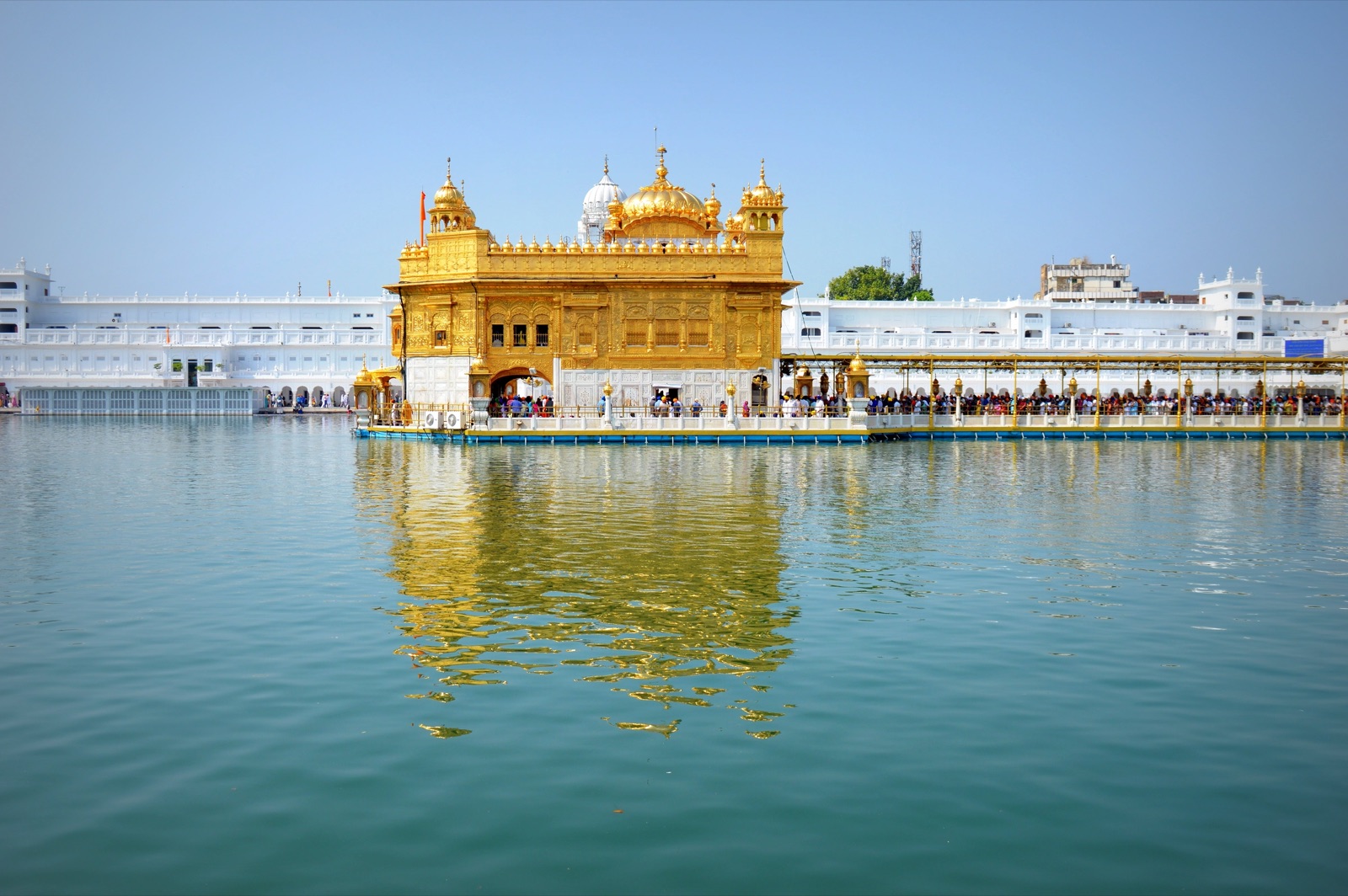
Status: Tentative List — not a UNESCO World Heritage Site
Submitted to UNESCO's Tentative List on 5 January 2004 (reference 1858), under cultural criteria (iii), (iv) and (vi). This is one of India's oldest still-active Tentative List entries — over two decades old — and, unlike the two Andaman & Nicobar proposals also on this watchlist, it has never progressed to a formal nomination. It is not counted among this guide's 45 confirmed sites — but UNESCO status aside, it's one of the most-visited religious sites on Earth, and is covered here in full.
Why it's stayed tentative for two decades — stated plainly, not glossed over
This isn't a case of paperwork moving slowly. The Shiromani Gurdwara Parbandhak Committee (SGPC), the Sikh body that manages Sri Harmandir Sahib, has publicly and repeatedly opposed actual World Heritage inscription — reporting has documented this position going back to at least 2015, and a public petition specifically calling for the site's removal from the Tentative List exists. The stated concern is loss of control: that formal UNESCO World Heritage status would bring external oversight into decisions that the Sikh community considers its own religious affair, not something requiring outside recognition or management input. Consistent with this, UNESCO's own World Heritage Centre has confirmed that despite the 2004 Tentative List entry, India has never actually submitted a formal nomination for inscription.
This guide takes no position on that question — it's a live matter for the Sikh community and the Indian state to work out, not something an outside travel guide should have an opinion on. It's stated here because leaving it out would misrepresent why a 20-year-old tentative entry has simply never moved, which is directly relevant to understanding its actual status.
Location
Amritsar, Punjab, in India's northwest, close to the Pakistan border. Sri Harmandir Sahib sits at the centre of the old city, around the sacred Amrit Sarovar pool.
How to Reach
- By air: Sri Guru Ram Dass Jee International Airport, ~11 km from the city centre — prepaid taxi counters inside the terminal, or Uber/Ola, roughly 20-30 minutes to the temple (longer in peak traffic).
- By rail: Amritsar Junction is well-connected to Delhi and other major North Indian cities.
- By road: Amritsar sits on the Grand Trunk Road; well-connected by bus and self-drive from Delhi (~450 km) and Chandigarh.
History
The site's religious history begins in the 16th century, when the fourth Sikh Guru, Guru Ram Das, founded the town that became Amritsar around the sacred pool. The temple itself was established by the fifth Guru, Guru Arjan Dev Ji. The current gold-clad structure largely dates to the early 19th century, under Maharaja Ranjit Singh, who had the upper floors gilded — the origin of the "Golden Temple" name in English. It remains the holiest Gurdwara (Sikh place of worship) in the world.
Food
- Amritsari Kulcha — the city's signature stuffed flatbread, widely considered the definitive version found anywhere in India.
- Punjabi thali at old-city institutions like Bharawan Da Dhaba (serving since the turn of the 19th century) — chana, dal, paneer, and related dishes.
- Sarson da saag with makki di roti, chole bhature, fish fry, and lassi — all Amritsar/Punjab staples widely available across the city.
- Guru ka Langar itself (see Visiting below) — simple vegetarian food (roti, dal, sabzi, kheer), free, and arguably the most culturally significant meal in the city regardless of cuisine ranking.
Clothing & Handicrafts
Phulkari embroidery is Punjab's defining textile craft — intricate floral needlework traditionally found on dupattas, shawls, jackets, and saris. Hall Bazaar is the main shopping district for Phulkari pieces and general handicrafts near the old city.
Culture & Festivals
- Baisakhi (mid-April) — the Punjabi New Year and harvest festival, and one of the most significant dates in the Sikh calendar; celebrated with Nagar Kirtan processions, Bhangra and Gidda performances, melas (fairs), and community meals, with Amritsar's gurdwaras at the centre of celebrations.
- Gurpurab — commemorates the births of the Sikh Gurus, marked by a week of cultural events culminating in a Nagar Kirtan procession (hymn-singing, community food-sharing).
- Both festivals turn Sri Harmandir Sahib and the surrounding old city into their most crowded — and most alive — versions of themselves; a deliberate time to visit if you want the festival atmosphere, one to plan around if you'd rather avoid the crowds.
Sightseeing — beyond the temple itself
- Jallianwala Bagh — a short walk from the Golden Temple, the memorial to the 1919 massacre, with bullet marks still preserved on the walls. A sobering, essential counterpart to the temple visit, not a separate "extra" attraction.
- Wagah Border (~30 km away) — the daily Beating Retreat ceremony at the India-Pakistan border, a genuinely unique piece of nationalist theatre on both sides. Free entry, but arrive 2-3 hours early for seating; ceremony typically runs 4:30-5:30 PM, timing shifts by season.
- Partition Museum and Gobindgarh Fort — both in the old city area, covering the 1947 Partition and Maharaja Ranjit Singh-era Punjab respectively.
- Durgiana Temple — a Hindu temple built in a strikingly similar style to the Golden Temple, worth the contrast if time allows.
Suggested Itinerary (2 Days in Amritsar)
- Day 1: Golden Temple at dawn or late evening (quieter, and the gold dome catches the light best) → Guru ka Langar → Jallianwala Bagh → old-city food (Bharawan Da Dhaba or similar) → Hall Bazaar for Phulkari/handicrafts in the evening.
- Day 2: Partition Museum and Gobindgarh Fort in the morning → afternoon drive to Wagah Border, arriving early for seating → evening Beating Retreat ceremony → return to Amritsar.
Where to Stay
Amritsar has accommodation across every budget, with a genuine advantage most cities don't offer: several hotels and guesthouses in the old city are within easy walking distance of the Golden Temple itself, useful given the temple's round-the-clock hours reward an early or late visit.
Local Guides
Government-recognised local guides are available through Punjab Tourism and established tour operators for the wider Amritsar circuit (Jallianwala Bagh, Partition Museum, Wagah Border). The Golden Temple itself is generally self-navigable — its layout and etiquette are well-signed, and volunteers are present to help visitors, so a paid guide isn't required for the temple visit specifically.
Transport
Auto-rickshaws and prepaid taxis are the standard way to get around Amritsar; the old city core (Golden Temple, Jallianwala Bagh, Hall Bazaar) is compact and genuinely walkable once you're there. Wagah Border requires a taxi or organised tour given the distance and timed ceremony.
Realistic Costs (order-of-magnitude — verify current prices)
- Golden Temple entry: free, no ticket, 24 hours.
- Guru ka Langar: free.
- Jallianwala Bagh and Wagah Border: free entry (donations/optional extras aside).
- Gobindgarh Fort: roughly ₹150-649 for Indian nationals, ₹250-1000 for foreign nationals, depending on the experience/zone selected.
- Food and shopping costs vary widely; old-city dhabas are notably cheaper than anywhere immediately around major tourist sites.
- These figures are drawn from third-party travel-guide sources checked 2026-09-09, not official Punjab Tourism pricing — confirm current details before travel, especially for Gobindgarh Fort's ticketed experiences.
Know Before You Go
- Open 24 hours, every day, free entry to the Golden Temple — no booking needed.
- Head covering required for everyone, no exceptions — a cloth is provided free at the entrance if you don't bring your own.
- Shoes must be removed at the designated counters (free cloakroom).
- Modest dress expected — shoulders and knees covered; sleeveless tops, shorts, and revealing clothing are discouraged.
- Guru ka Langar is open to everyone, regardless of faith, nationality, or background — genuinely worth experiencing, not just observing from outside.
- Plan 3-4 hours for an unhurried first visit to the temple complex alone.
- Wagah Border: arrive 2-3 hours before the ceremony for a decent seat — this is not an exaggeration, the stands fill up fast.
Ratings (draft — not yet based on aggregated traveller review data)
| Category | Rating |
|---|---|
| History | ⭐⭐⭐⭐⭐ |
| Food | ⭐⭐⭐⭐⭐ |
| Nature | ⭐⭐½ |
| Shopping | ⭐⭐⭐⭐ |
| Family | ⭐⭐⭐⭐ |
| Solo traveller | ⭐⭐⭐⭐⭐ |
| Accessibility | ⭐⭐⭐⭐ |
| Value for money | ⭐⭐⭐⭐⭐ |
| Authenticity | ⭐⭐⭐⭐⭐ |
Ratings above are a first-pass editorial estimate, not derived from aggregated traveller review data.
Sources & Disclaimer
Compiled 2026-09-09 from UNESCO's own Tentative List records, multiple news sources on the SGPC's documented opposition (reporting dating from 2015 through more recent coverage), and current (2026-dated) visitor-guide sources for the practical entry/etiquette/sightseeing details, cross-checked across sources rather than taken from one. The SGPC-opposition sourcing is the oldest-dated material on this page — no 2026-specific news confirming the position is unchanged was found during this research pass, only that no nomination has been filed in the intervening years, which is consistent with the opposition still standing rather than proof of it. If you're aware of a more recent, official update either way, that would be worth this page revisiting. Tentative List status can be confirmed directly at whc.unesco.org/en/tentativelists. Visitor details (timings, dress code, fees at nearby paid attractions) change over time — verify current information directly with the SGPC/Golden Temple's own visitor resources and Punjab Tourism before travelling.